Jan 1
Political Notebook: LGBTQ history matters await SF supervisors
Matthew S. Bajko READ TIME: 6 MIN.
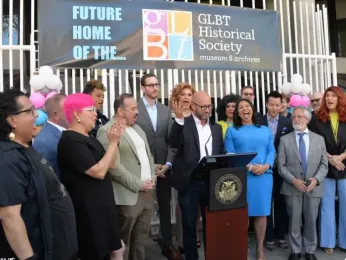
LGBTQ historical matters await the San Francisco Board of Supervisors when it returns from its holiday hiatus next week. City leaders still must finalize the lease for a new LGBTQ history museum before it can open in the LGBTQ Castro neighborhood.
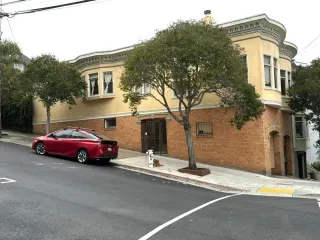
And a number of sites not far from the new home for the GLBT Historical Society will come before the supervisors this year to designate as local landmarks. Among them is the one-time residence of the late Bay Area Reporter founding publisher Bob Ross, who died in 2003 at age 69, located at the corner of Castro and 20th streets.
Gay District 8 Supervisor Rafael Mandelman, who is board president, is seeking to have 16 properties across his district, from Cole Valley to the Mission, be deemed city landmarks. During LGBTQ History Month in October, the supervisors approved moving them forward.
But first a city oversight panel tasked with reviewing historic preservation issues must weigh in on the nominated properties. It is expected to take up the matter later this month.
“We are planning for the Historic Preservation Commission public hearing on January 21 for this batch of landmarks,” Richard Sucré, the deputy director of the city’s planning department and its historic preservation team lead, told the B.A.R.
Once it does, the landmarks will return to the supervisors, whose land use committee will first need to vote on them. Following the panel’s hearing, the full board will cast votes to finalize landmarking the properties, which should occur sometime in March, providing some protection to their facades and requiring greater scrutiny of any redevelopment plans for the sites.
Less certain is when the supervisors will cast votes on the LGBTQ museum lease. Mandelman in the summer had told the B.A.R. he wanted to introduce it in October so it could be finalized before the end of 2025.
But that timeline has now come and gone. Nailing down the lease has faced repeated delays, as it was initially expected the supervisors would vote on it during the first quarter of last year. In September 2024, the city purchased the Market & Noe Center at 2280 Market Street for $11.6 million to serve as the permanent home for the GLBT Historical Society’s museum and archival center.
Ever since, the city's Real Estate Division housed within the City Administrator’s office has been working out a lease agreement with the historical society and the Community Arts Stabilization Trust. Known as CAST, the community-centered, arts and culture focused real estate organization works to secure and steward affordable spaces for nonprofit arts and culture organizations in San Francisco.
While CAST initially was floated to be the master leaseholder and enter into a sublease with the historical society, city officials in August had told the B.A.R. the historical society would be the master leaseholder. CAST was to be contracted to serve solely in a property management and asset management role, with its fee for doing so expected to be 10% of the total gross revenues for the building, which would be covered by any lease payments made by the historical society in addition to the current two commercial tenants in the shopping center.
City Administrator spokesperson Angela Yip told the B.A.R. in mid-December she hoped to have “a better sense” after the new year for when the museum lease will be introduced to the supervisors. It isn’t expected to be ready in time for Mandelman to do so at the first 2026 meeting of the full board on Tuesday, January 6.
“We are still working on it but don’t have firm dates yet unfortunately,” said Yip.
The shopping center is prominently located at a main entry point into the historic Duboce Triangle neighborhood that borders the Castro. The plan is for the historical society to first move into the vacant second floor, with build out of the space for its museum installations to be covered by $5.5 million in state funds and additional money raised by the nonprofit via a capital campaign.
Gay state Senator Scott Wiener (D-San Francisco) had secured the state funds for the museum project in 2022, and as chair of the Senate Budget Committee, had inserted language into California’s 2025 state budget that the unused funds were to be used by June 30 next summer. With the lease negotiations dragging on, however, he had told the B.A.R. in the fall that state officials would administratively change that language in order to give the GLBT Historical Society more time to access the funding.
As for the current tenants of the building’s ground floor commercial spaces fronting Market Street, they will need to move out when their leases expire to allow for the historical society to expand into those spaces and become the sole occupant of the roughly 11,000 square foot structure. Barry's Bootcamp is subleasing its storefront from CVS and can remain through 2040, while UCSF Health-GoHealth Urgent Care has a lease for its clinic through 2036.
Under terms announced last year by city officials, the city was to retain 10% of the monthly $58,000 in lease payments from the commercial tenants and put the rest of the money into a separate reserve account to be used by the historical society for capital improvements and possibly programming. The city's long-term goal is to eventually transfer ownership of the property to the GLBT Historical Society.
Proposed landmarks run the gamut
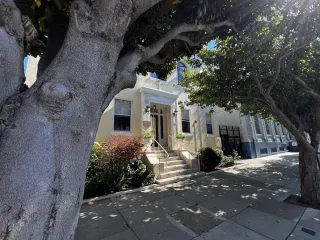
As for the batch of local landmarks Mandelman is sponsoring, seven directly correspond to the city’s LGBTQ history. Not far from where the new LGBTQ museum is going is the historic former site of LGBTQ synagogue Sha’ar Zahav (1983-1998) at 220 Danvers Street.
Mandelman selected it for landmarking along with the LGBTQ-friendly Most Holy Redeemer Roman Catholic Church’s buildings at 100-117 Diamond Street. Included is the hospice building where the religious congregation had cared for its parishioners and others diagnosed with HIV soon after the start of the AIDS epidemic in the 1980s.
The Catholic Church sites are a short walk from where the current GLBT History Museum is located in a storefront subleased from Walgreens at 4127 18th Street. And nearby to the jewel-box of a museum just off the intersection of 18th and Castro streets is where a plaque was recently installed honoring Ross, a gay man and chef who for a time had lived two blocks away at 4200 20th Street.
The residential property is proposed to be landmarked due to its period of significance in the 1970s, though Ross lived there until the 1990s, when he moved to Clinton Park, according to gay B.A.R. publisher Michael Yamashita. Also under consideration for landmark status are the San Francisco AIDS Foundation’s inaugural site at 514-20 Castro Street and the building at 582 Castro Street that once housed the Castro Rock Steam Baths from 1971 until 1977.
Also on the list are locations of several pioneering but now defunct lesbian-owned businesses. They are the former site (1966-1989) of Maud’s bar at 929-41 Cole Street and the former site (1974-1977) of the Full Moon Coffeehouse at 4416 18th Street.
The other properties Mandelman wants to see become city landmarks include St. Paul’s Church at 1660 Church Street (Roman Catholic), which was the exterior used for the film “Sister Act;” St. Matthew’s Church (Lutheran) at 3281 16th Street; and St. Nicholas Cathedral (Russian Orthodox) at 2005 15th Street. Two locations related to the city’s fire department – Hose Company No. 30, located at 1757 Waller Street and Engine Company No.13, 1458 Valencia Street – are also on the list.
Three additional residential properties would also become landmarks due to their architectural significance: 102 Guerrero Street, 361 San Jose Avenue, and the Chautauqua House located at 1451 Masonic Avenue. The latter, built in 1909, was where the American Indian Historical Society had its headquarters from 1967-1986 and would be the first city landmark related to American Indian history.
The last building on the list is the Bank of Italy Branch Building, located at 400-410 Castro Street at the intersection of Market Street. It sits at the entrance to Harvey Milk Plaza and the Castro Muni Station, considered to be the front door into the neighborhood and set to see a new elevator go into service later this winter and a reimagining of the public parklet break ground this fall.
Political Notes, the notebook's online companion column, returns Monday, January 12.
Keep abreast of the latest LGBTQ political news by following the Political Notebook on Threads @ https://www.threads.net/@matthewbajko and on Bluesky @ https://bsky.app/profile/politicalnotes.bsky.social.
Got a tip on LGBTQ politics? Call Matthew S. Bajko at (415) 829-8836 or email [email protected].